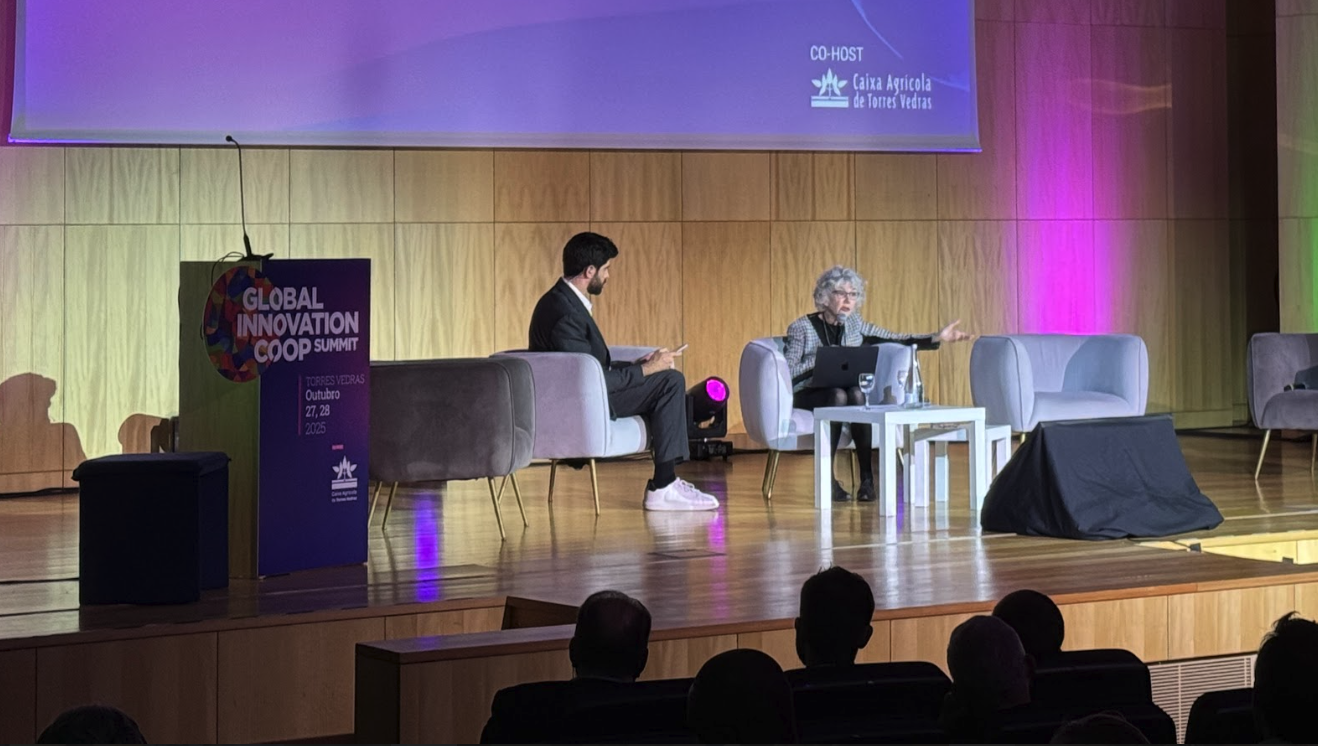
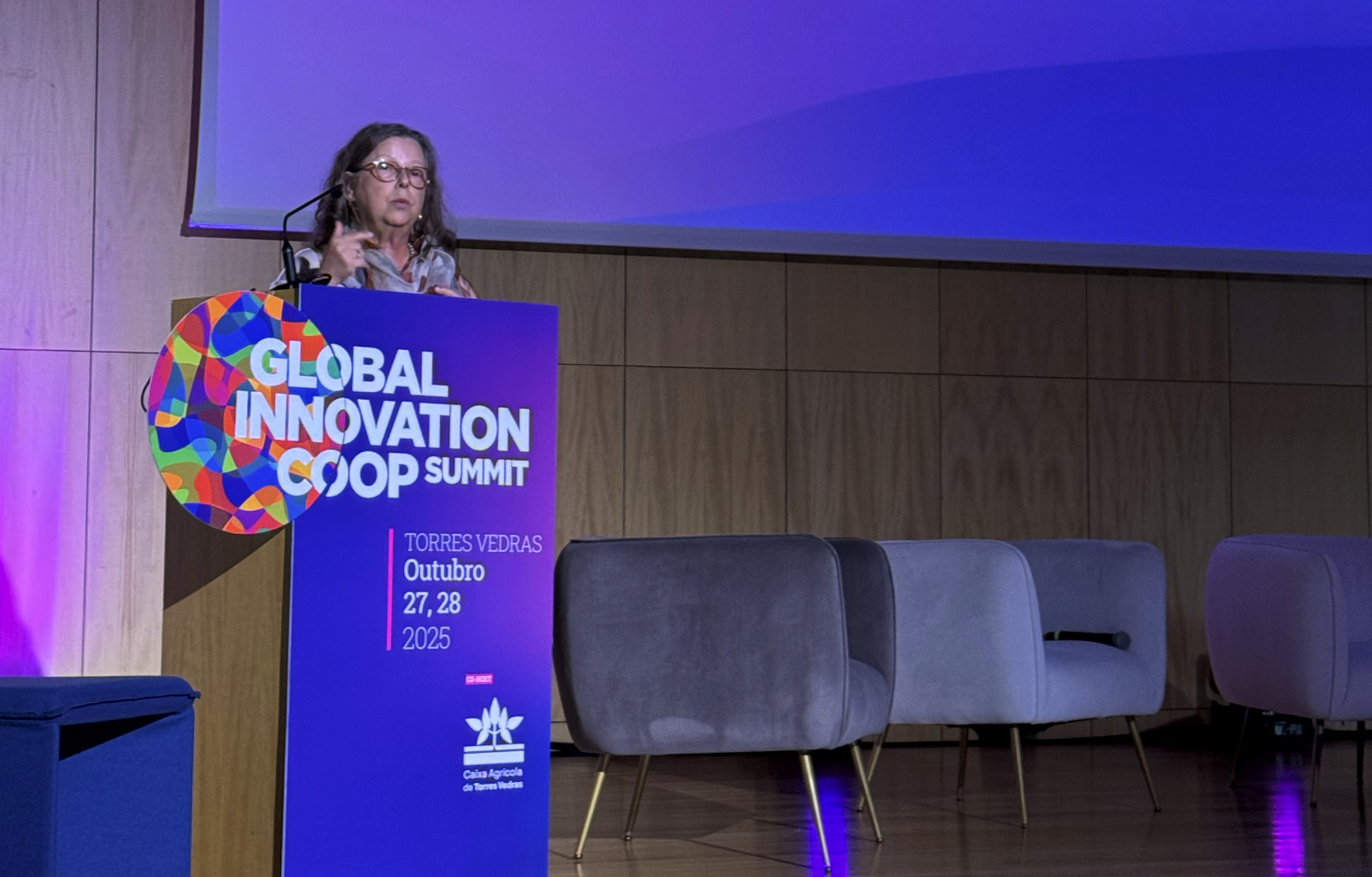
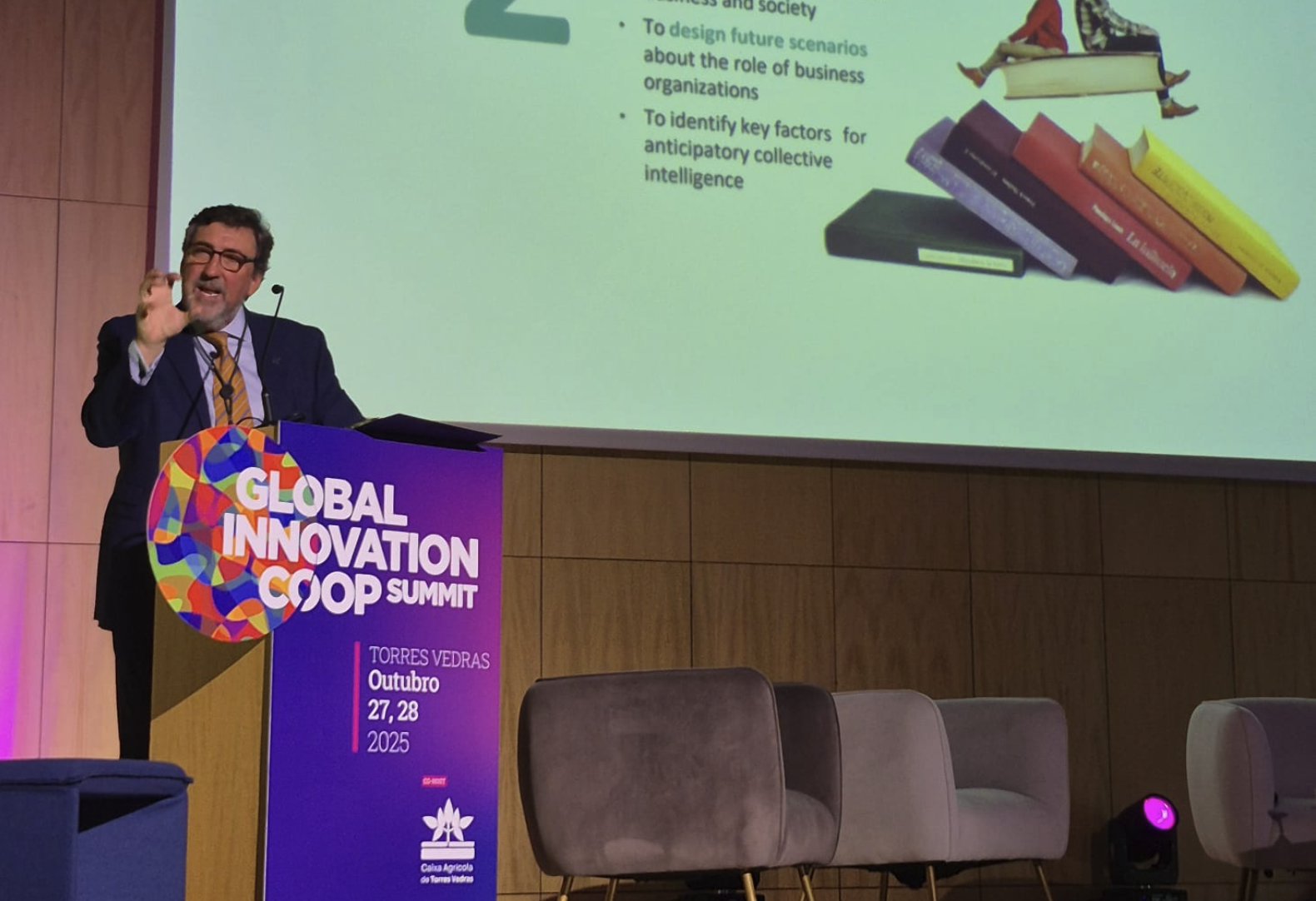
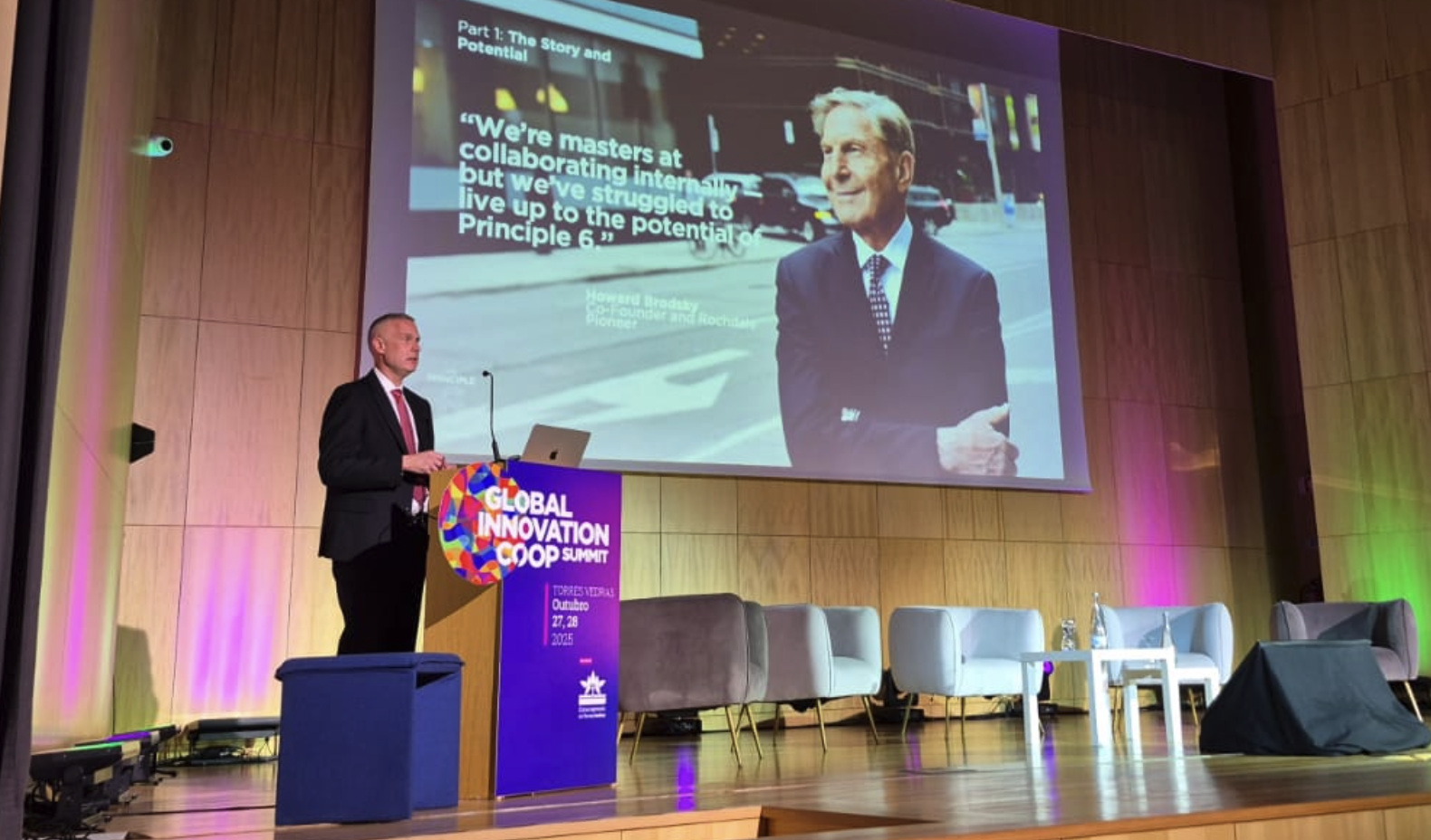
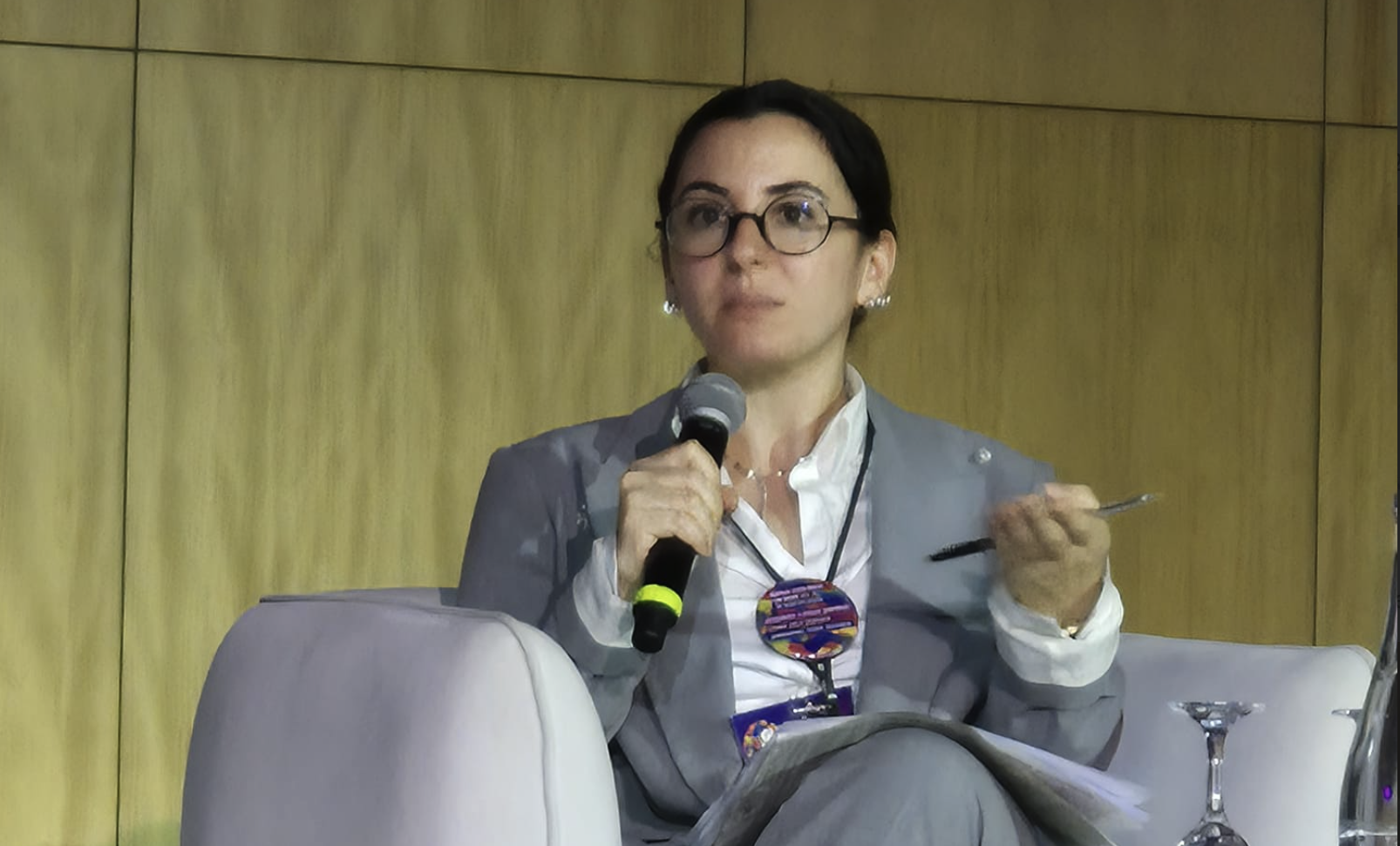
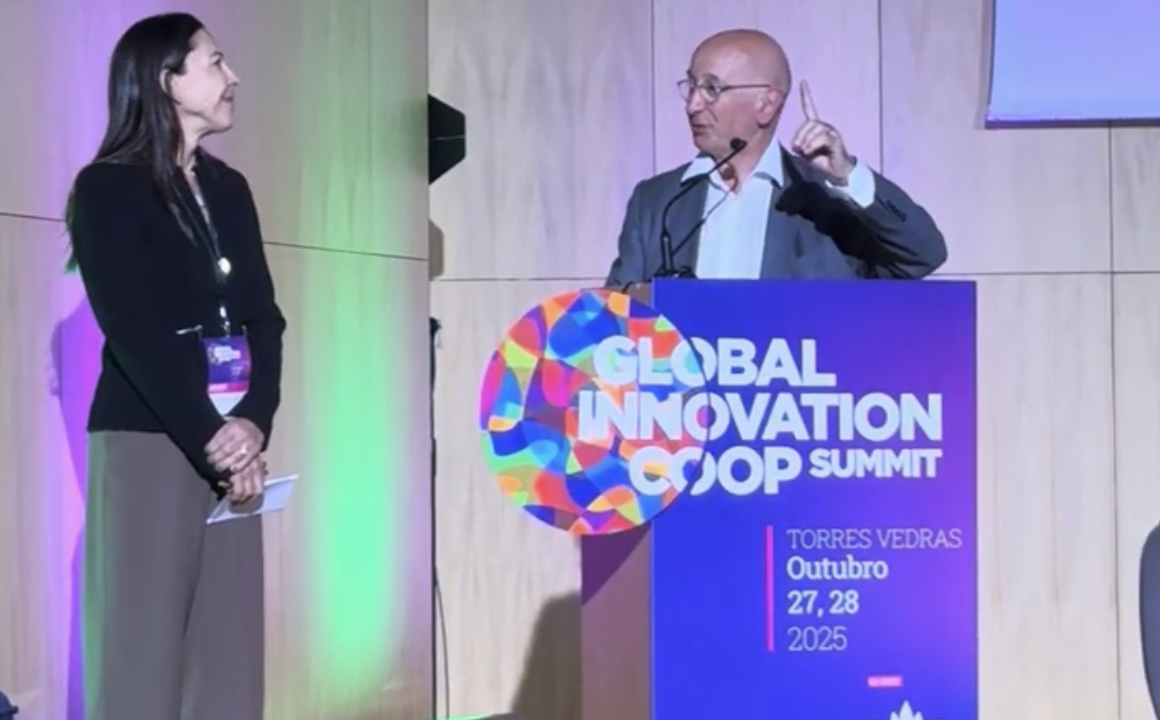
The 2025 Global Innovation Coop Summit took place in Torres Vedras, Portugal, from October 27 to October 28 in Centro Paraquial de Torres Vedras. Under the umbrella of the International Year of Cooperatives, 400 attendees participated in GICS’ third edition. Here is a brief recap of the event.
DAILY SUMMARY
OCTOBER 27 - Day 1
PLENARY SESSION
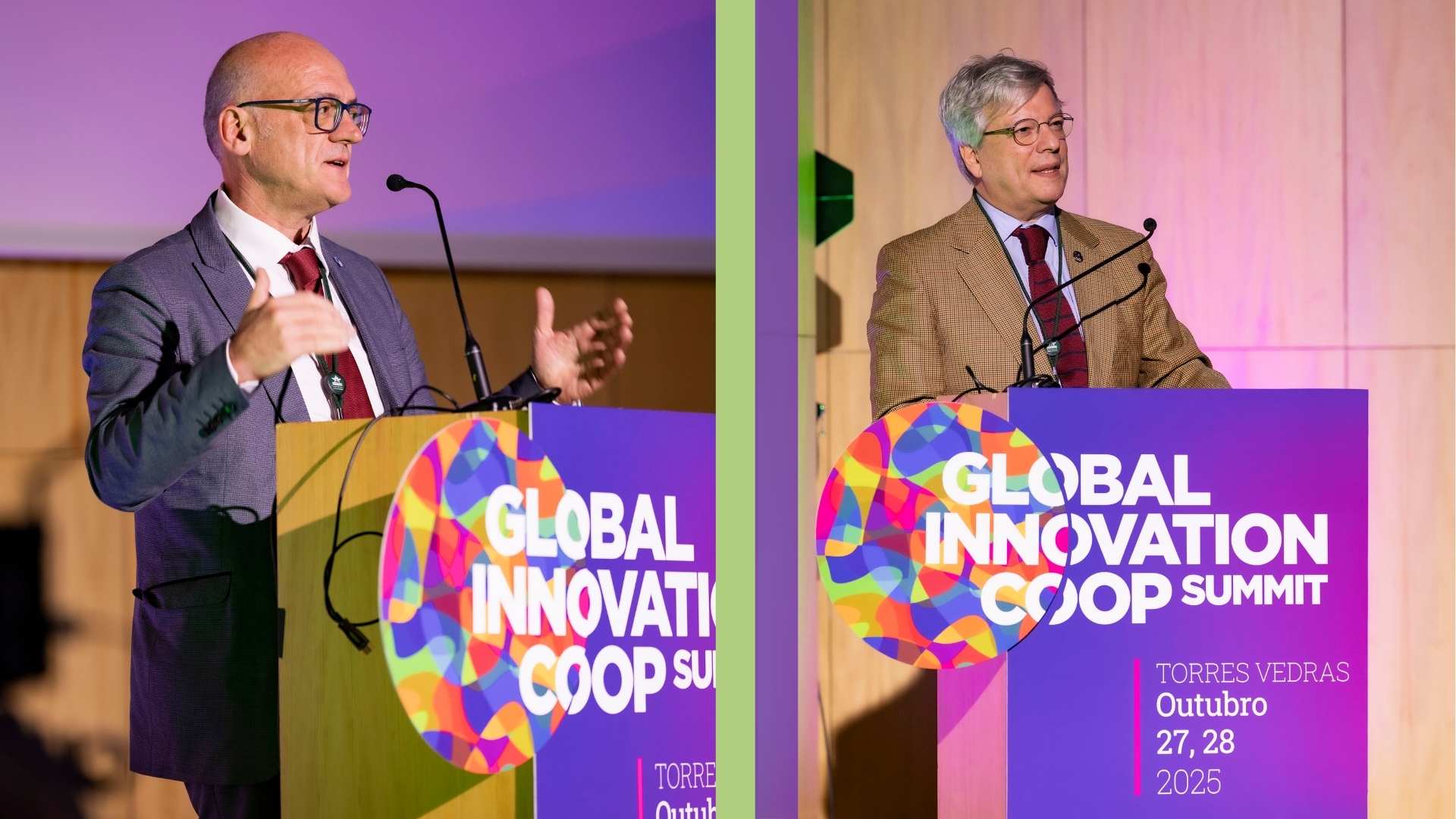
The welcome address:We heard inspiring speeches from distinguished speakers, beginning with welcoming words from Luiz Branco, co-founder of GICS and CEO of WEX Business. This was followed by remarks from António Guterres, Secretary-General of the United Nations; Paulo Rangel, Portugal’s Minister of Foreign Affairs, Ariel Guarco, President of the International Cooperative Alliance; and Giuseppe Guerini, President of Cooperatives Europe.
Navigating Turbulence: Economic Challenges and Democratic Threats Jean-Louis Bancel, ICIN co-founder, board member and treasurer, provided an analysis of current geopolitical and economic instabilities, calling on cooperatives to demonstrate resilience and collective responsibility.
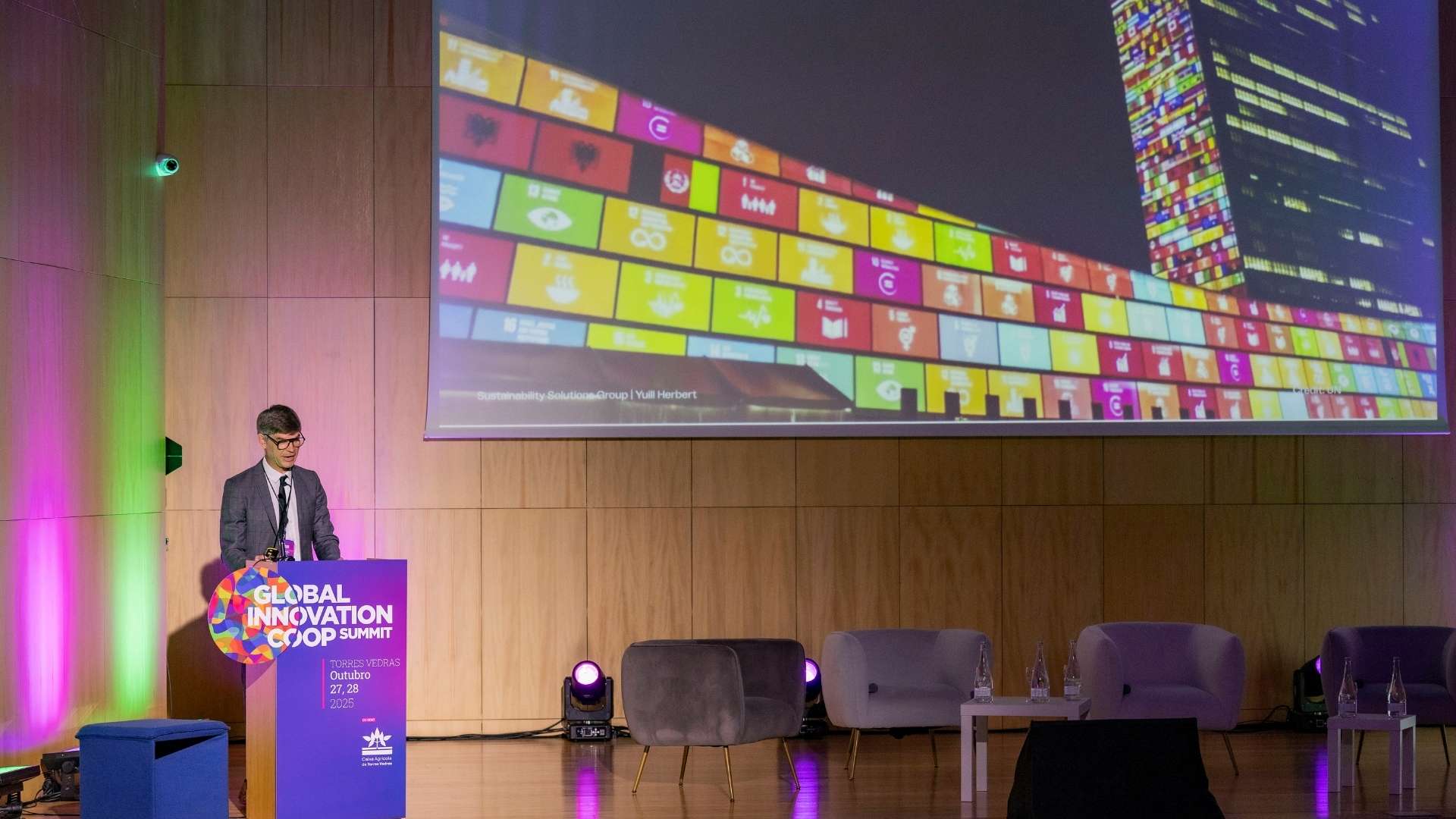
The Tipping Points Yuill Herbert, co-founder of the Sustainability Solutions Group, examined the ways in which societies are converging on irreversible tipping points across climate systems, technological change, and global geopolitics. He stressed the urgency of prevention, resilience, and collaboration to ensure a sustainable future.
PILAR 1 – Empowering People to Act: Aligning Words and Actions Jean-Louis Bancel moderated this plenary that explored how cooperatives could “walk the talk” by fostering ethical practices, transparency, and social inclusion. Panelists Elena Badeanschi, Ana Rita Antunes, Dr. Carlos Zarco, and Constanza Fernández-Grenno shared strategies to strengthen social responsibility and collective resilience.
PARALLEL SESSIONS – Empowering People to Act
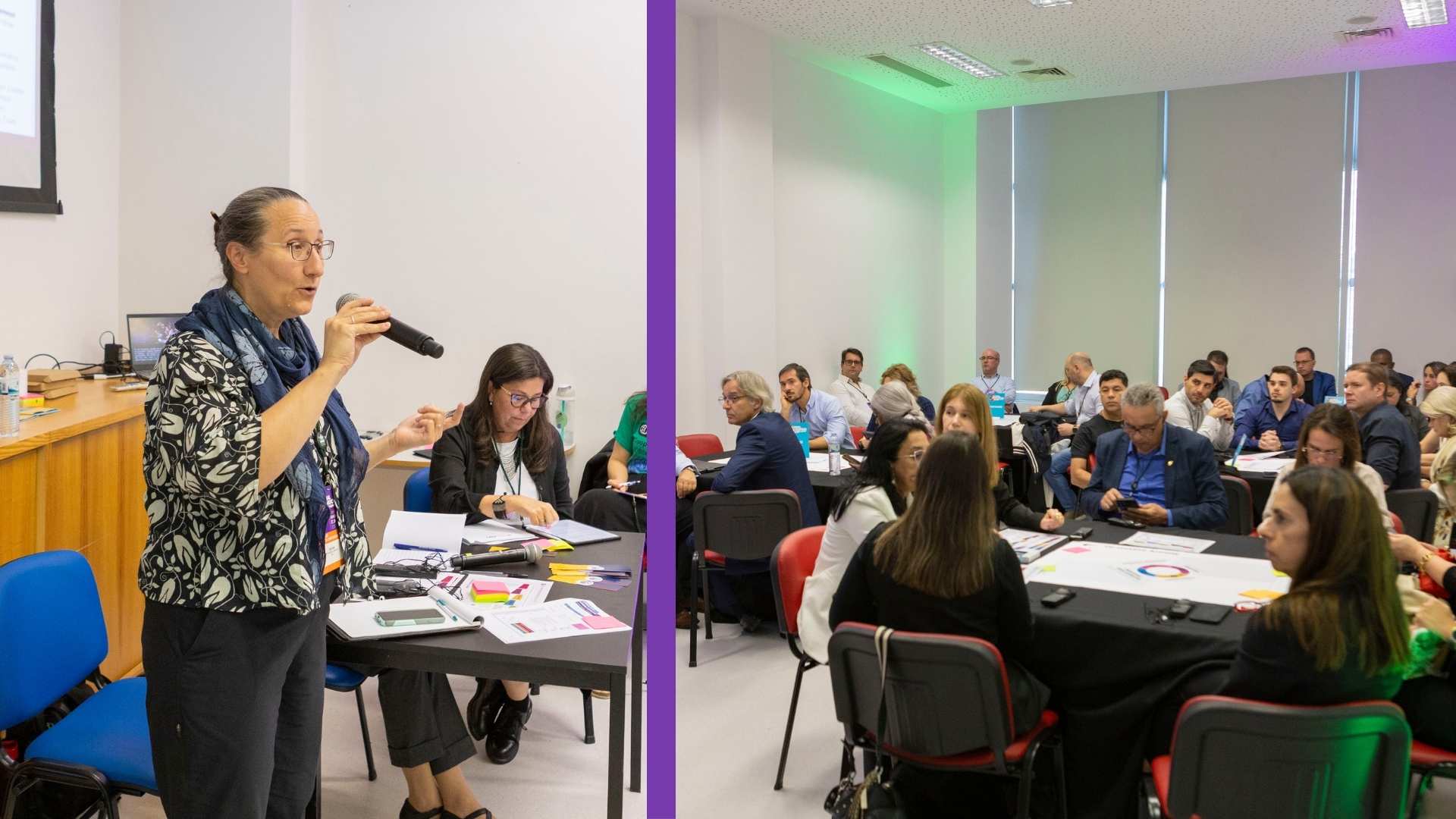
Participants were divided into four parallel sessions to dive deeper into this topic, and to discuss the challenges they face, the tools they have at their disposal, and learn from best practices to consider for their organizations.
The Innovation Factory 1: Building a Culture of Accountability. Led by Michel Séguin. This session encouraged participants to co-create ethical frameworks promoting transparency.
Workshop 1.1: Leveraging Human Capital to Drive Innovation. Moderated by by Cathy Statz. This session examined leadership and collaboration as key drivers of transformation.
Workshop 1.2: AI for Empowerment. Moderated by David Beauchemin. This session explored how artificial intelligence can enhance ethical decision-making and transparency.
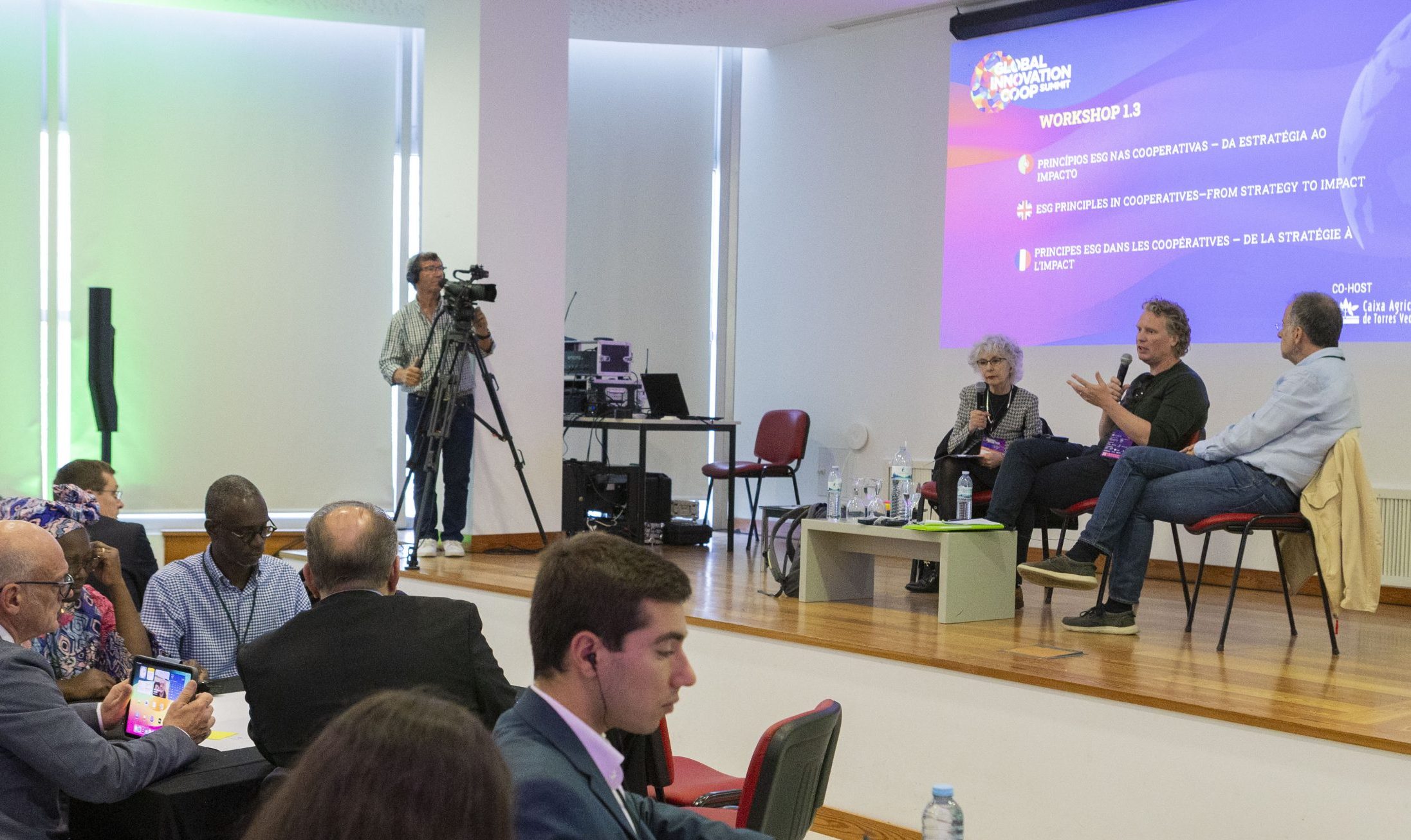
Workshop 1.3: ESG Principles in Cooperatives. Moderated by Alexandra Wilson. This session focused on integrating sustainability and governance into cooperative operations.
PLENARY SESSION – What We Learned from the Workshops
Moderated by Daniel Brunette, this session summarized the morning’s key takeaways from the “Empowering People to Act” workshops.
PILAR 2 – Building Trust Together
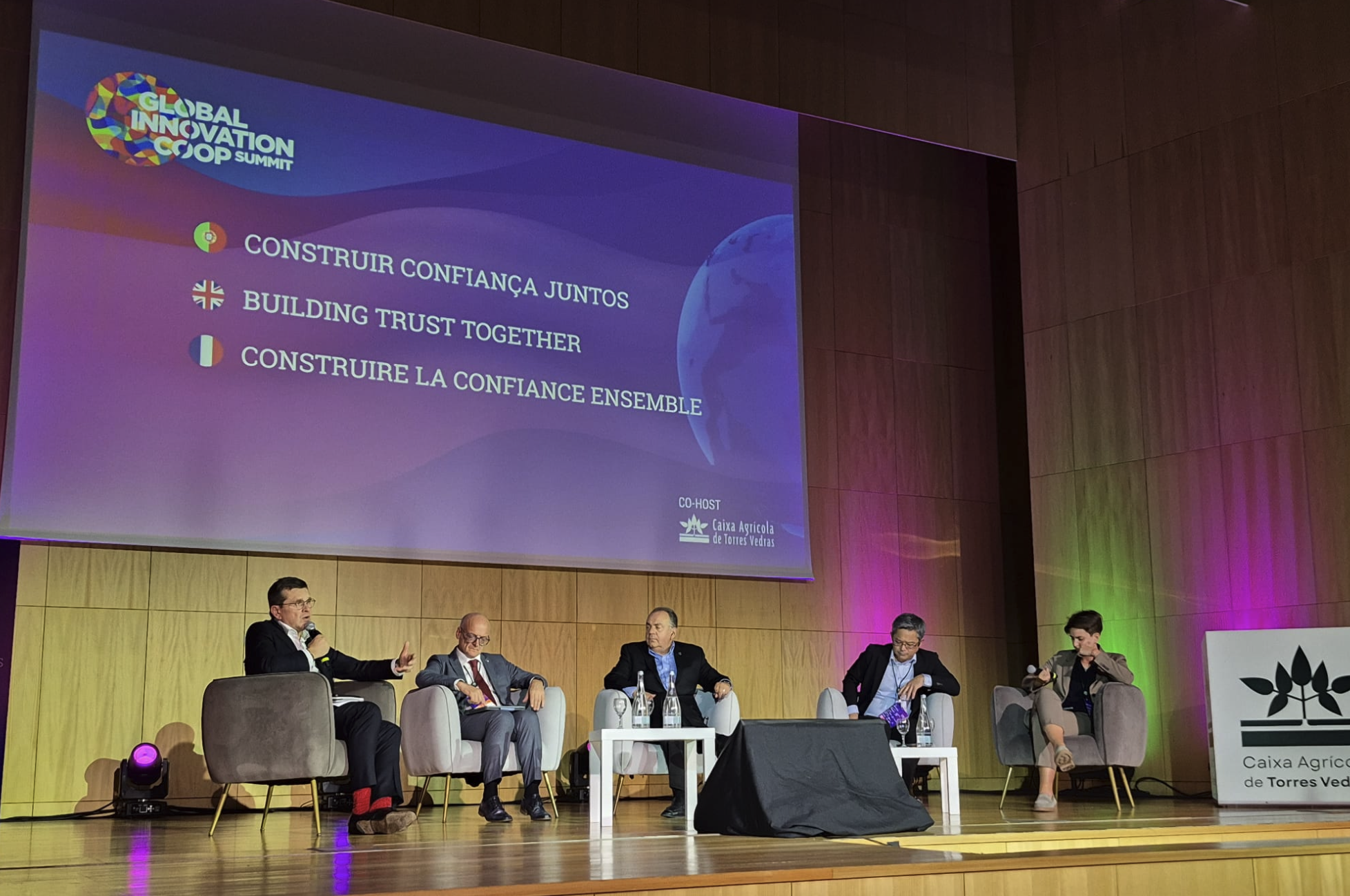
Moderated by Olivier Clyti, this plenary discussed expanding cooperative impact through global and digital inter-cooperation. Giuseppe Guerini, J. Benoit Caron, Osamu Nakano, and Sarah Nicole emphasized the power of partnerships and shared digital infrastructure
Building Trust Together
Participants were divided into four parallel sessions to dive deeper into this topic, and to discuss the challenges they face, the tools they have at their disposal, and learn from best practices to consider for their organizations.
Innovation Factory 2: Cooperatives in the digital age: challenges, opportunities, and collective strategies.
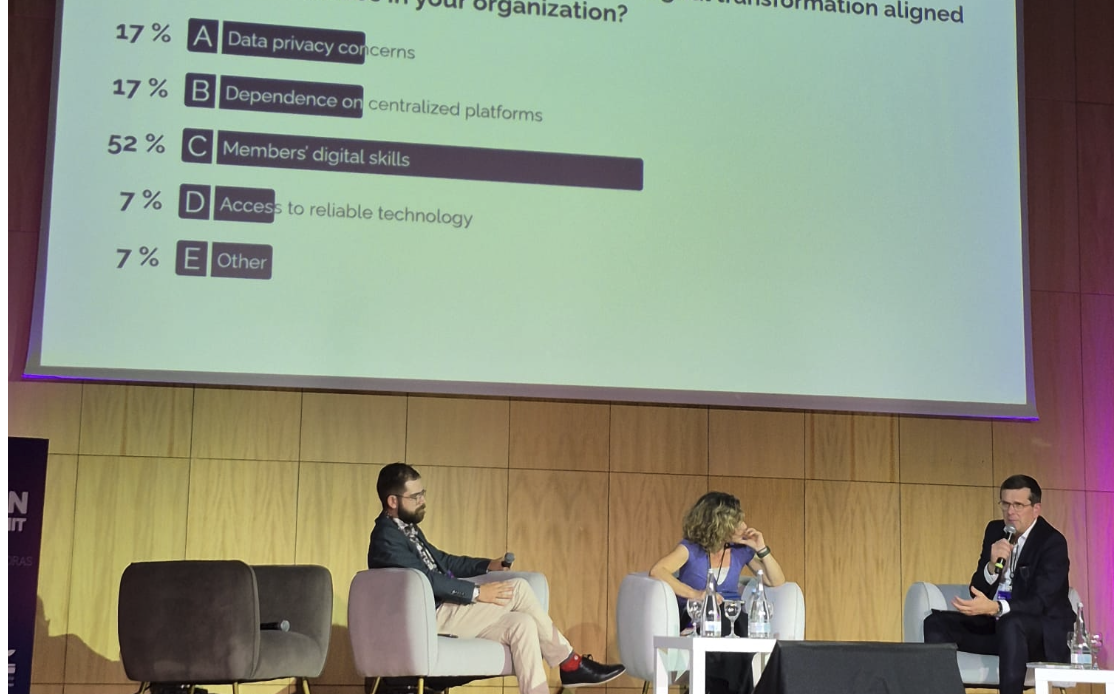
Jacob Matthew Drum guided participants to collaboratively explore the risks and opportunities of digital transformation and how cooperatives can build trust with members and partners. Attendees used the interactive real-time Mur Web tool, to share ideas with all participants.
Workshop 2.1: Building Impactful International Cooperative Partnerships
Moderated by Giuseppe Guerini, this session highlighted best practices in cross-border cooperation.
Workshop 2.2: Collaborative Solutions to Global Challenges
Lead by Yuill Herbert, this session addressed climate change, social inequality, and improving health issues through cooperation.
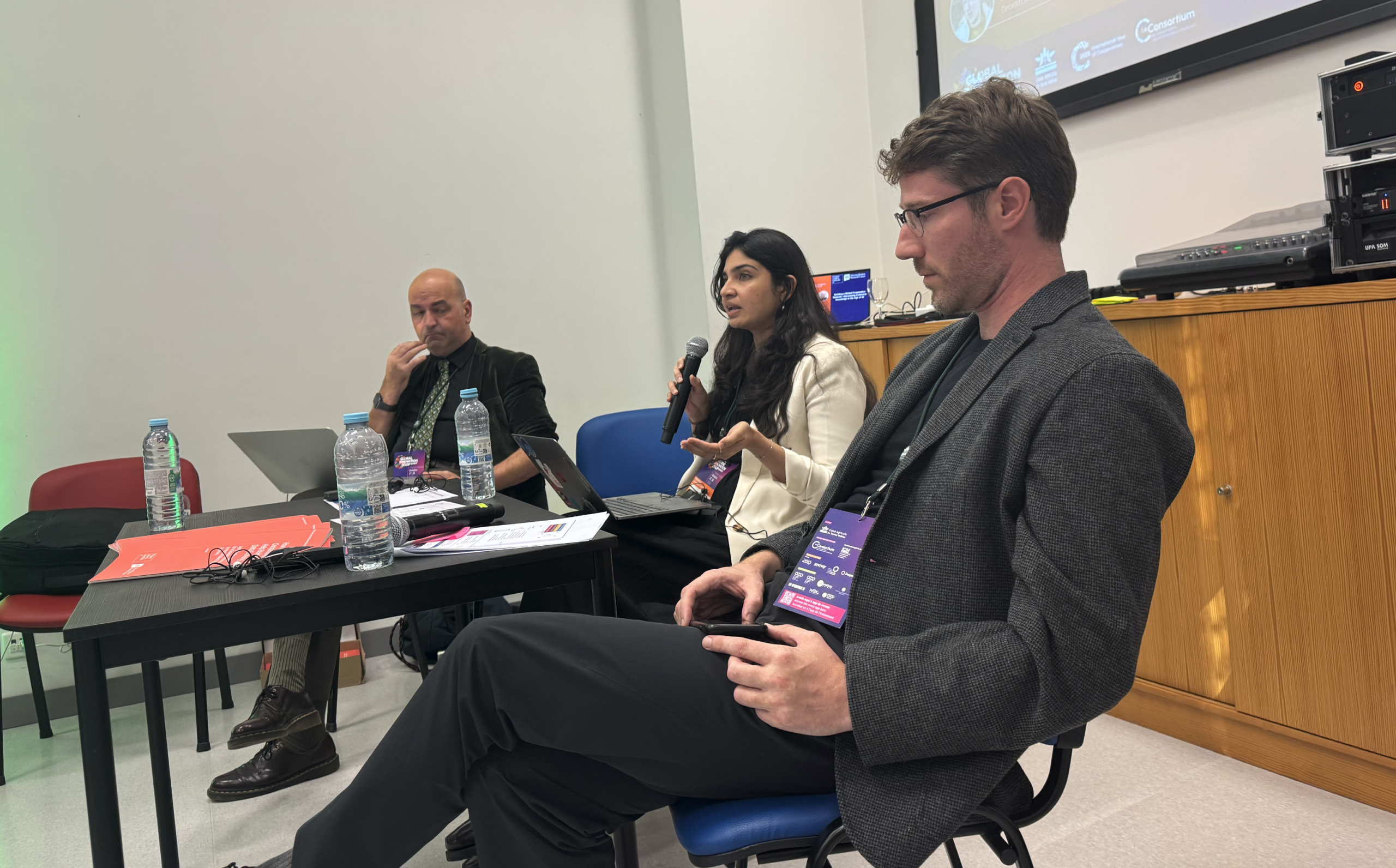
Workshop 2.3: Building a Global Cooperative Network: Harnessing Collective Knowledge in the Age of AI.
Led by Samuel Vance-Law, this session explored AI’s potential for ethical collaboration.
PLENARY SESSION – INTERVIEW WITH ICA
Alexandra Wilson shared her vision for an inclusive and digital cooperative economy in an interview with Arthur Bruel.
OCTOBER 28 - Day 2
PLENARY SESSIONS
The Opening Remarks:Joanne Lechasseur, Secretary General of ICIN, presented GICS’ journey to Portugal and stresserd International Cooperative Innovation Network’s (ICIN) commitment to providing a space for cooperatives to gather and collaborate, by continuing to organize future events. She invited participants to become members of ICIN.
ASETT: The Arizmendiarrieta Social Economy Think Tank German Lorenzo introduced the MONDRAGON-led initiative uniting cooperatives, academia, and public institutions to foster global innovation in the social economy.
What We Learned from the Workshops: Building Trust Together Daniel Brunette facilitated a recap with Jacob Matthew Drum, Giuseppe Guerini, Yuill Herbert, and Samuel Vance-Law, summarizing insights on digital trust and intercooperation.
PILAR 3 – Co-Creating for Inclusive and Lasting Change
Moderated by Meredith Lobel, this plenary explored how cooperatives drive social and environmental transformation. Nikol Ostianová, Thomas Meyer, and Rebecca Savoie discussed sustainable investments, energy transition, and inclusive governance.
PARALLEL SESSIONS – CO-CREATING FOR INCLUSIVE AND LASTING CHANGE
Participants were divided into four parallel sessions to dive deeper into this topic to discuss the challenges they face, the tools they have at their disposal, and learn from best practices to consider for their organizations.
Innovation Factory 3: Co-creating the future of cooperation: a live principle 6 experiment
Lead by Justin Hammons and Meredith Lobel, participants experienced Principle 6, a new cooperative-owned digital platform designed to strengthen collaboration, amplify shared intelligence, and scale cooperation.
Workshop 3.1: Ecological Solutions for Cooperatives
Led by Asia Guerreschi, the discussion focused on the circular economy and renewable energy initiatives.
Workshop 3.2: AI for Energy Transition
Moderated by David Beauchemin, this workshop explored AI’s role in optimizing renewable systems.
Workshop 3.3: From Resilience to Impact, Facilitated by Benoit André, this discussion emphasized the leadership role of cooperatives in the circular economy.
PLENARY SESSIONS
What We Learned from the Workshops Moderated by Daniel Brunette, with Justin Hammons, Asia Guerreschi, David Beauchemin, and Benoit André, the discussion summarized the day’s innovations and key cooperative practices.
Cooperate for the Future: From Innovation to Action Agnès Mathis moderated a closing roundtable where Osamu Nakano, Siward Zomer, Ilana Gotz, and Robby Tulus reflected on translating innovation into lasting global impact.
Building a Better World with Cooperatives – A Collective Commitment to Impact Joanne Lechasseur concluded with a call for a continued commitment to cooperative principles as a path toward a fairer and more sustainable world. This moment also marked the presentation of the official declaration of the Global Innovation Coop Summit, which will be submitted to the United Nations as part of the International Year of Cooperatives, reaffirming the cooperative movement’s collective pledge to build a more inclusive, equitable, and sustainable global future.
Award Ceremony Hosted by Arthur Bruel, the ceremony honored Maria de Belém (Social Economy Award) and António José dos Santos (Cooperative Credit Award).
Closing Remarks The Summit concluded with reflections from Christina Procopio, Jean-Louis Bancel, and Dr. Manuel Guerreiro, reaffirming the importance of collaboration to face global tipping points.